 Medically reviewed by Dr. Yuvraj Monga, MBBS, MD, Indian HIV & STD specialist · Updated
Quick answer
See a doctor immediately if you had a possible HIV exposure in the last 72 hours: emergency PEP can prevent HIV but only if started within 72 hours. Book a consultation within days if you have symptoms after an exposure, a reactive or unclear test, a partner diagnosed with HIV, or STD symptoms. Plan a routine consultation for PrEP, regular testing, pregnancy planning or ongoing anxiety.
Quick Decision Guide
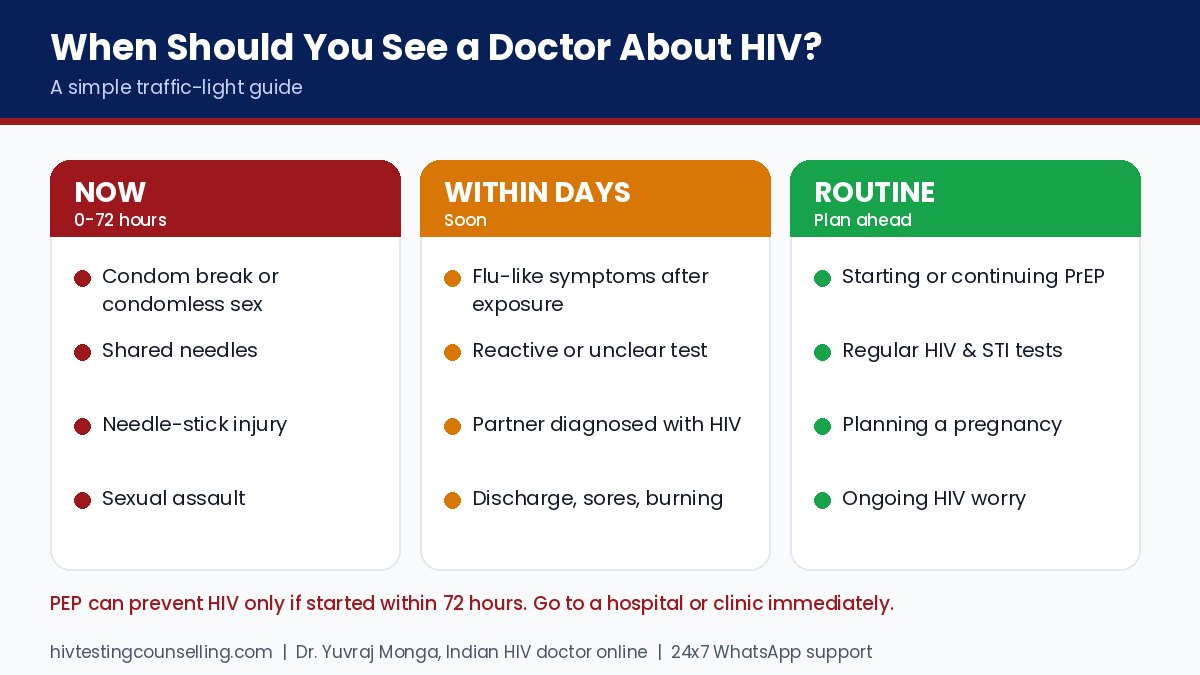
Now (0–72 hours)
- Condom break or condomless sex with a partner of unknown or positive status
- Shared needles
- Needle-stick injury
- Sexual assault
Within days
- Flu-like symptoms 2–4 weeks after an exposure
- A reactive or indeterminate test
- A partner newly diagnosed with HIV
- Discharge, sores or burning
Routine
- Starting or continuing PrEP
- Regular HIV and STI testing
- Planning a pregnancy
- Persistent worry about HIV
Consult Immediately: The 72-Hour PEP Window
PEP (post-exposure prophylaxis) is a 28-day course of HIV medicines that can prevent infection after an exposure. It must start within 72 hours, and the sooner the better. Go to a hospital emergency department, a sexual health clinic or a doctor who can prescribe PEP, and say clearly that you need an HIV PEP assessment.
Read more about PEP, why every hour matters for PEP and where to get PEP at night or on weekends.
Symptoms That Need a Doctor
After a possible exposure, consult a doctor within days if you notice fever, rash, sore throat, swollen glands, mouth ulcers or unusual tiredness, especially 2–4 weeks later. These are not proof of HIV, but they are a reason to test with the right test, possibly a NAT. See early HIV symptoms.
For people living with HIV, seek prompt care for persistent fever, unexplained weight loss, a cough lasting more than two weeks, persistent diarrhoea, severe headache or confusion.
After a Test Result
- Reactive or positive: see a doctor within days for confirmation and to start care. Treatment works best when it starts early.
- Indeterminate: a doctor will plan a repeat test or NAT.
- Negative but taken early: ask when to retest; see the window period guide.
When Worry Itself Needs Help
Some people continue to fear HIV long after conclusive negative tests: checking symptoms, testing repeatedly or losing sleep. This is common and treatable. Counselling helps you understand your real risk, close the chapter with confidence and, where needed, get support for anxiety. Read coping with anxiety while waiting for results.
Special Situations
Your partner has been diagnosed with HIV
Consult within days. You need testing, and depending on the timing, possibly PEP. If your partner is on treatment with an undetectable viral load, the risk through sex is effectively zero; counselling helps you both understand this and plan, including PrEP if appropriate.
You are pregnant or planning a pregnancy
Consult early. HIV testing is part of antenatal care, and early treatment makes passing HIV to the baby very unlikely.
The exposure happened while travelling
Seek PEP locally within 72 hours; don't wait to fly home. Then plan follow-up tests wherever you will be. Read what to do after an exposure abroad.
You took PEP and feel unwell
Mild nausea, bloating and tiredness are common. Fever with rash, yellow eyes or severe abdominal pain needs prompt care. Read PEP side effects.
What Happens at Your First Consultation
- Your storyWhat happened, when, and what worries you most. Nothing you say is judged.
- Risk assessmentAn honest view of how risky the exposure really was, and whether PEP is still possible.
- A dated planWhich tests, on which dates, and what each result will mean.
- Next stepsReferral or prescription where needed, anxiety support, and follow-up.
Who Should You See?
For emergencies, a hospital emergency department or a sexual health clinic. For testing, a sexual health clinic, a government testing centre (ICTC in India) or a licensed laboratory. For long-term HIV care, an HIV or infectious disease specialist. For clear answers, planning and emotional support, at any stage, a confidential counselling session with an experienced HIV doctor, online or in person.
How to Prepare for Your Consultation
- The date and type of the possible exposure.
- Any tests you've had, with dates and report photos.
- Your symptoms and when they started.
- Medicines you take, including PEP or PrEP.
- Your questions, written down, so nothing is forgotten.
Online or In Person? Consult an Indian HIV Doctor Online
Online counselling is ideal for risk assessment, test planning, report explanations, anxiety and ongoing support. In-person care is needed for examinations, tests and, outside India, prescriptions.
Dr. Yuvraj Monga, an Indian HIV, AIDS and STD specialist with more than 25 years of experience, consults online with people in India and worldwide, with 24x7 WhatsApp support. In India, he also sees patients at clinics in Lajpat Nagar, Dwarka and Gurugram. Local guides: USA · Canada · Dubai & UAE · India.
Frequently Asked Questions
When should I see a doctor after a possible HIV exposure?
Immediately, ideally within hours and no later than 72 hours, to be assessed for PEP.
What if more than 72 hours have passed?
PEP is usually no longer offered, but you should still plan testing at the right times and consider counselling for the anxiety in between.
Do I need a doctor if I have no symptoms?
Yes, if you had a possible exposure. Many people with HIV have no early symptoms; only a correctly timed test gives the answer.
What should I do after a positive HIV test?
See a doctor within days for confirmatory testing and to start care. Treatment is highly effective, especially when started early.
Can I consult a doctor online about HIV?
Yes. Online consultations are ideal for risk assessment, test planning and report explanations. Dr. Yuvraj Monga, an Indian HIV doctor, consults online worldwide with 24x7 support.
Is my consultation confidential?
Yes. You can start with only a first name, and everything you share is kept private.
Sources and Further Reading
From our sister site, PEP Treatment for HIV
Related guides
Online HIV counselling where you live
Medical note: This guide is for education and does not replace a consultation with a doctor. If an exposure happened in the last 72 hours, seek PEP at a hospital or clinic now. Outside India, tests and prescriptions come from a provider licensed where you live.